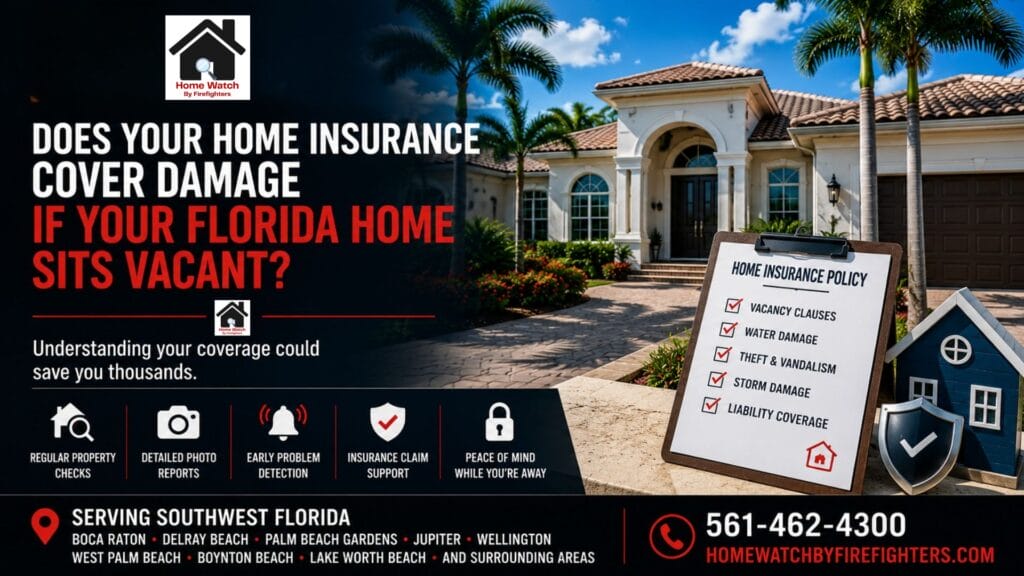
Does Your Home Insurance Cover Damage If Your Florida Home Sits Vacant?
Many Florida homeowners assume their insurance policy will cover any damage that occurs while they’re away. Unfortunately, that’s not always the case.
If you own a seasonal home, vacation property, or spend extended periods away from your residence, your insurance coverage may be affected by how long the property remains vacant or unoccupied.
Understanding how vacancy affects homeowners insurance can help you avoid costly surprises and better protect your investment.
Home Watch by Firefighters helps homeowners throughout Palm Beach County monitor vacant properties and identify problems early before they become expensive insurance claims.
What Is Considered a Vacant Home?
Many homeowners are surprised to learn that insurance companies have specific definitions for vacant and unoccupied properties.
Quick Answer
A vacant home is generally a property that is largely empty of people and personal belongings for an extended period of time.
An unoccupied home may still contain furniture and belongings but remains unused for a significant period.
Insurance companies often treat these situations differently.
Why Do Insurance Companies Care About Vacancy?
Vacant properties typically present a higher risk.
When nobody is regularly checking a home, problems can continue unnoticed for days, weeks, or even months.
Common Risks in Vacant Homes
Water leaks
Mold growth
Storm damage
Vandalism
Pest infestations
Roof leaks
HVAC failures
Electrical problems
Security concerns
Because these risks increase when a home sits empty, many insurance carriers include vacancy-related provisions in their policies.
Can Insurance Companies Deny Claims on Vacant Homes?
This is one of the most common concerns among seasonal homeowners.
Quick Answer
Depending on the policy and circumstances, some insurance claims may be limited, reduced, or denied if a home remains vacant beyond the period allowed by the insurance company.
Every policy is different, which is why homeowners should carefully review their coverage requirements.
How Long Can a Florida Home Be Vacant Before It Affects Insurance?
The answer varies by insurance carrier.
Quick Answer
Many insurance policies contain vacancy clauses that may apply after a home has been vacant for a specified period, often ranging from 30 to 60 days.
Homeowners should review their individual policy or consult their insurance provider for exact requirements.
What Types of Damage May Be Affected?
Certain types of claims receive greater scrutiny when a property has been vacant.
Potentially Affected Claims
Water damage
Pipe leaks
Mold claims
Theft claims
Vandalism claims
Storm-related damage
Liability incidents
The longer damage goes undetected, the more questions an insurance company may have about maintenance and property oversight.
Why Water Damage Is One of the Biggest Concerns
Water damage is one of the most expensive problems affecting vacant homes.
Quick Answer
A small plumbing leak can cause thousands of dollars in damage if nobody discovers it quickly.
Water can damage:
Flooring
Drywall
Cabinets
Furniture
Electrical systems
Personal belongings
Mold can begin growing within 24 to 48 hours after moisture exposure.
How Home Watch Services Help Protect Homeowners
Professional home watch services provide regular inspections of vacant properties.
Quick Answer
Home watch professionals help identify issues early, allowing homeowners to address problems before they become major insurance claims.
Routine inspections may include checking:
Plumbing systems
HVAC systems
Doors and windows
Signs of leaks
Storm damage
Security concerns
Humidity levels
Exterior conditions
Early detection often reduces both repair costs and claim severity.
Can Home Watch Reports Help With Documentation?
Documentation is extremely valuable when issues arise.
Quick Answer
Professional home watch reports provide dated records, inspection notes, and photographs that document a property’s condition over time.
These reports may help demonstrate that the property was being monitored responsibly.
Typical reports include:
Inspection dates
Photos
Condition summaries
Maintenance observations
Emergency notifications
What Problems Are Commonly Found During Home Watch Inspections?
Many issues discovered during inspections start small.
Examples Include
Slow plumbing leaks
Roof damage
HVAC failures
Excess humidity
Pest activity
Pool equipment issues
Landscape concerns
Storm-related damage
Addressing these problems early often prevents much larger repairs later.
Why Florida Homes Require Extra Attention
Florida properties face unique environmental challenges.
Common Florida Risks
Hurricanes
Heavy rainfall
High humidity
Tropical storms
Salt air exposure
Seasonal vacancies
These factors make regular inspections particularly important for absentee homeowners.
Who Benefits Most From Home Watch Services?
Professional home watch services are ideal for:
Snowbirds
Seasonal residents who spend months outside Florida.
Vacation Homeowners
Properties that sit vacant between visits.
Frequent Travelers
Homeowners who travel regularly for business or leisure.
Absentee Property Owners
Owners who live out of state but maintain Florida residences.
Luxury Homeowners
Large properties requiring ongoing oversight and vendor coordination.
Why Firefighter-Owned Home Watch Services Stand Out
Trust matters when someone is responsible for monitoring your property.
Quick Answer
Firefighter-owned home watch companies bring professionalism, accountability, integrity, and emergency-response experience to property care.
Home Watch by Firefighters applies these principles to every inspection and homeowner relationship.
Their team focuses on:
Detailed inspections
Reliable communication
Emergency preparedness
Thorough reporting
Property protection
Exceptional customer service
Frequently Asked Questions
Is a vacant home the same as an unoccupied home?
Not always. Insurance companies often define these terms differently.
Should I notify my insurance company if I’m leaving for several months?
Many homeowners choose to discuss extended absences with their insurance provider to better understand coverage requirements.
How often should a vacant Florida home be checked?
Weekly or biweekly inspections are common, particularly during hurricane season.
Can regular inspections help reduce risks?
Yes. Early detection helps prevent minor issues from becoming major losses.
Final Takeaways
Many Florida homeowners are unaware that extended vacancies can impact their insurance coverage.
Regular property monitoring helps reduce risks, identify problems early, and provide valuable documentation when issues arise.
Key Points to Remember
Insurance policies may contain vacancy provisions
Water damage is one of the biggest risks in vacant homes
Small problems can become major claims if left unnoticed
Professional inspections help identify issues early
Detailed reports provide valuable documentation
Home watch services help protect your investment
Protect Your Home While You’re Away
Whether you own a seasonal residence, vacation home, or investment property, professional home watch services provide peace of mind when you’re away.
To learn more about Home Watch by Firefighters and their Florida home watch services, call 561-462-4300 or visit https://
- Home Watch by Firefighters LLC
- 1227 Merlot Drive Palm Beach Gardens, FL 33410
- Todd@HomeWatchbyFirefighters.com
- 561-462-4300